 REDNECK ENGINEERING
Taxi meter simulator app: seven city meters, for fun
Taximeter is a taxi meter simulator app: pick one of seven city meters, start it, watch the fare tick on a demo ride or on your own trip by GPS, then open the receipt and share it. It isn't downloadable yet and is in beta. It's made for fun, not for charging fares, and its receipts are simulated: the English wording on the slips reads "Not a legal receipt. Not valid for payment."
The next step is the Taximeter app page. The page shows more of the meters and has a Get in touch section, which is how to ask about helping test it.
Pick a meter and start it
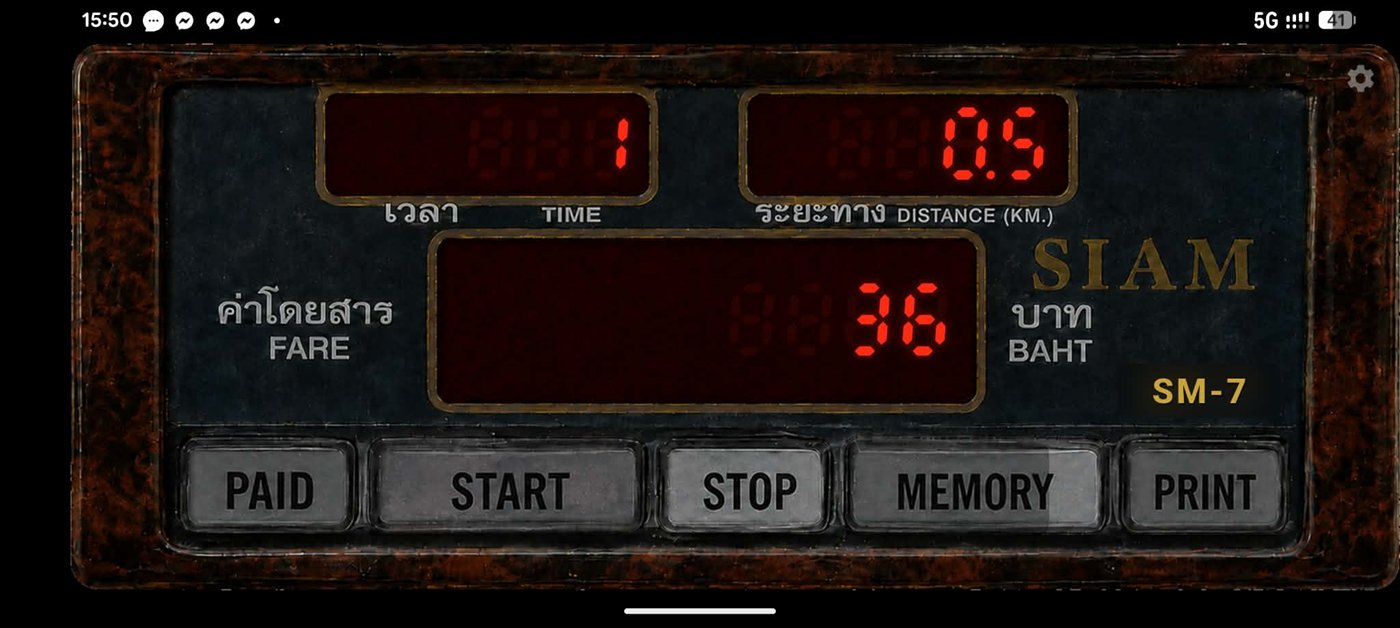
The app's menus are in Swedish, so the labels below come with their English meaning. It runs in landscape and opens on Bangkok.
- Tap the gear at the top right to open Inställningar (Settings).
- Under TAXAMETER (meter), pick Stockholm, New York, Bangkok, London, Tokyo, Berlin or Mexico City.
- Under RESA (ride), leave the switch off for the demo ride, or turn on Skarp resa (GPS) (live ride) to measure your real trip. GPS needs location permission; the demo needs none.
- Go back and press the meter's own start button.
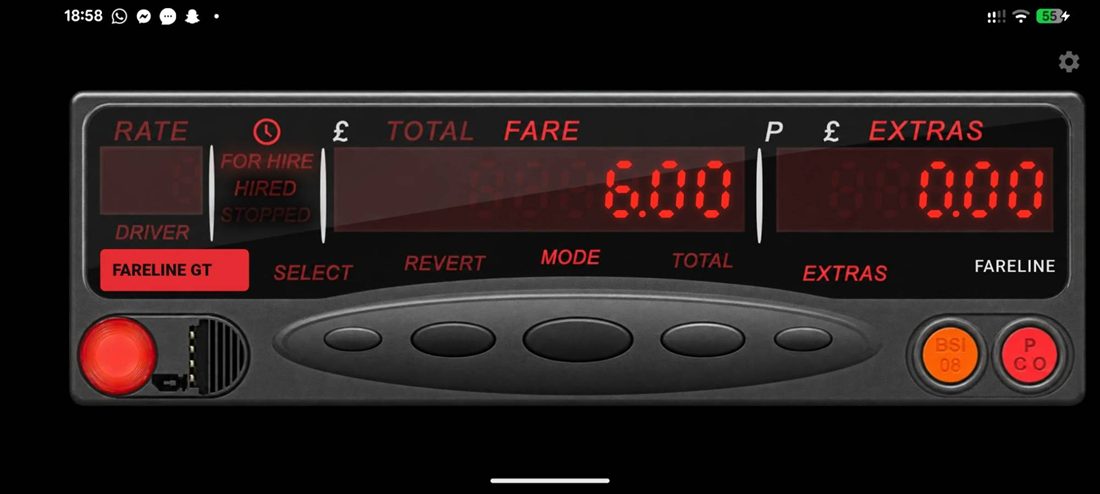
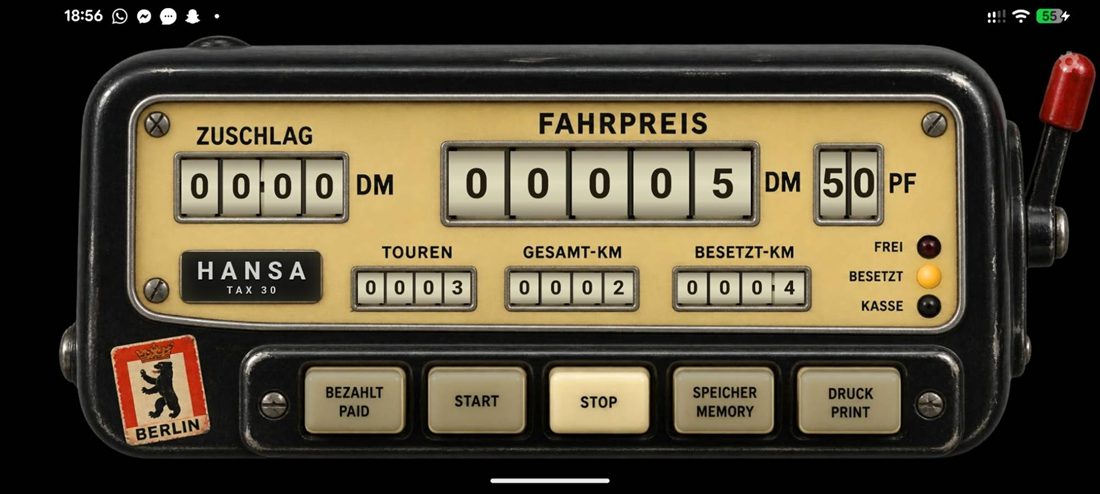
Each meter has its own buttons. Bangkok and Berlin say START and STOP. On London's, SELECT starts, MODE stops, REVERT marks the ride paid and TOTAL opens the receipt, and the big red button steps through start, stop and paid. The steps below use Bangkok's labels.
The demo is a scripted drive with a red light, a queue and a main road: just under six minutes of meter time and a bit under 3 km. It plays at 5× and stops by itself. The meter counts on the ride's own timestamps, so the fare comes out the same as in real time. On a GPS ride, you stop the meter yourself.
Open the receipt and share it
Once the meter has stopped, PRINT opens the receipt on screen. Nothing is printed on paper. PAID asks Skriv ut kvitto? (Print receipt?): Ja (yes) opens it, Nej (no) skips it, and either way the meter then resets. On the receipt, Dela (Share) sends the slip as an image through your phone's share menu.
Receipts follow the city: Swedish for Stockholm, English for New York and London, Thai and English for Bangkok, Japanese and English for Tokyo, German for Berlin, Spanish for Mexico City. The date, slip number and start and end rows are in English on all of them.
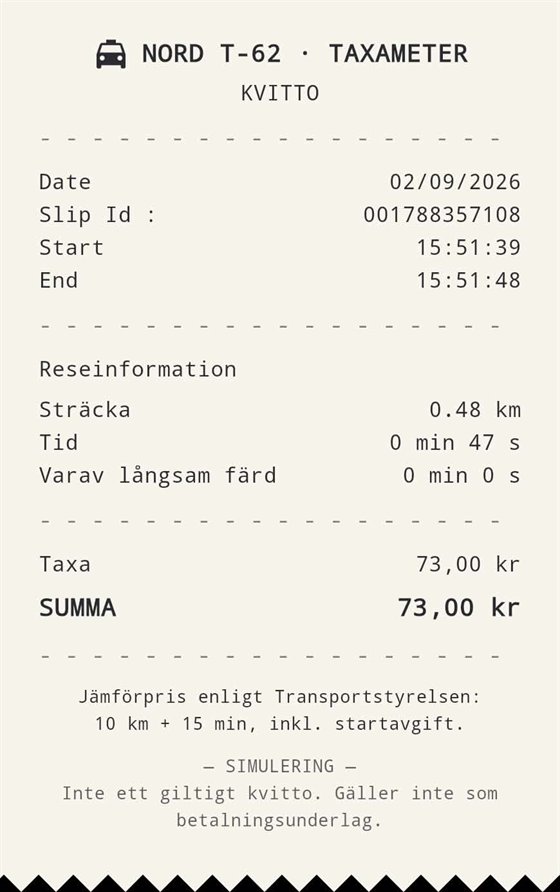
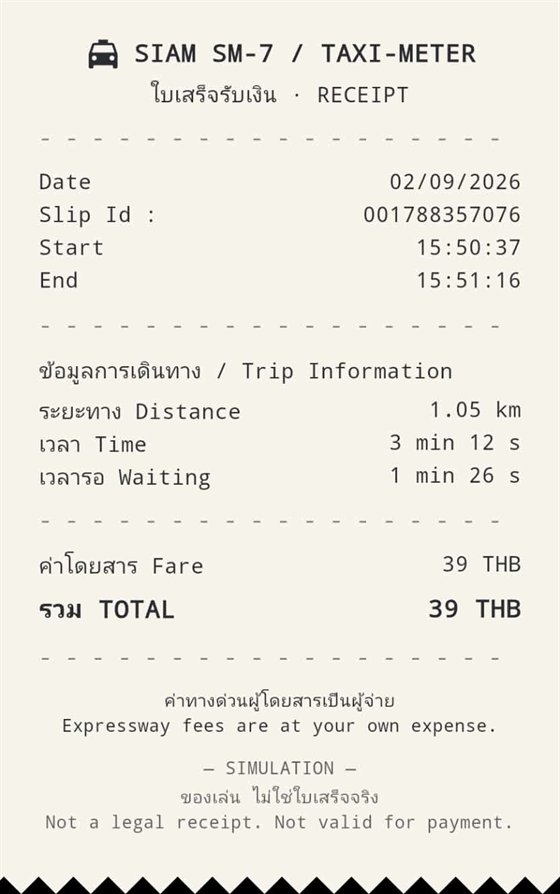
Both rides fit the demo script, stopped early, and they show the 5×: the Stockholm slip's start and end are 9 seconds apart, while Tid (time) says 47 seconds.
How each city's meter counts
The app's meters don't all add up a fare the same way. Its built-in tariffs use three methods:
- Either/or (New York, London, Tokyo, Mexico City). Above a set speed, distance drives the meter. Below it, time does. Never both.
- Both at once (Stockholm). Distance and time run together, so a stopped car keeps costing money.
- Km steps, and time when slow (Bangkok, Berlin). The price per km depends on how far the ride has gone: it rises in Bangkok and falls in Berlin. Below a set speed, the meter charges per minute instead.
This table is what the app has built in. It isn't a statement of any city's rules, or of what a ride costs today.
| Meter | Method in the app | Built-in rates | Rate year |
|---|---|---|---|
| Stockholm (Taxa 1) | Both at once | 59 kr start, 14.90 kr per km plus 595 kr per hour | 2026 |
| New York | Either/or, time below 12 mph | $3.00 start including 1/5 mile, then 70¢ per 1/5 mile or per 60 s. $1.50 in surcharges on every ride, plus night and rush-hour extras by the clock | 2022 |
| London (Tariff 1, weekdays 05–20) | Either/or, time below 16.7 km/h | £4.40 start including 155.8 m, then 20p per 77.9 m or 16.8 s; per 64.5 m or 13.9 s after about 9.6 km | 2026 |
| Tokyo | Either/or, time below 10 km/h | ¥500 start including the first km, then ¥100 per 232 m or 85 s. A 20% night surcharge, 22:00–05:00, works by shortening the units | 2026 |
| Mexico City | Either/or, time below 20 km/h | MXN 8.74 start, then 1.07 per 250 m or 45 s. Nights 23:00–06:00: 10.48 and 1.28 | 2024, not verified |
| Bangkok | Km steps, time below 6 km/h | 35 baht start including the first km; 6.50 per km to 10 km, 7.00 to 20, 8.00 to 40, 8.50 to 60, 9.00 to 80, 10.50 beyond. 3 baht a minute when slow | 2023 |
| Berlin | Km steps, time below 15 km/h | €4.30 start; €2.80 per km to 3 km, €2.60 to 7 km, €2.10 beyond. 65 cents a minute when slow. The lever sets a €6.00 short-trip fare up to 2 km | 2024 |
The Stockholm slip above checks out by hand: 59 kr, plus 0.48 km at 14.90, plus 47 seconds at 595 kr per hour, is about 73.92 kr. The meter rounds down to whole kronor, so the slip says 73,00 kr.
The app's London meter also has evening, weekend and night tariffs, chosen by the clock at the start, with shorter units.
Settings mark six cities' tariffs källkontrollerad (source-checked), and the app's source code dates that check to 29 August 2026. For Stockholm the source is one company's price list, Taxi Stockholm's Taxa 1. Mexico City is the exception: settings mark it ej verifierad (not verified), because its numbers come from press reports. Under TAXOR (tariffs) in settings you can change the start fee and the distance and time rates, and Återställ till förinlagd taxa puts the built-in rate back. The surcharges, Tokyo's night percentage and Berlin's short-trip fare can't be edited there.
Two more of the faces
The meters are modelled on the originals. These two carry invented brands.
Where it stands
The project has an Android build setup; an iPhone build isn't confirmed. In settings the app calls itself an emulator, not an approved measuring instrument, and says it must not be used to charge for rides.
The Taximeter blog lists the posts about the app.
How these posts are made: Redneck Engineering writes them with the help of AI and reviews them before they are published. Every claim about the app is checked against the app as it is today, the screenshots are from the app, and facts that don't come from the app have a dated source. Found a mistake? Email cj@rocsales.se and we'll fix it.